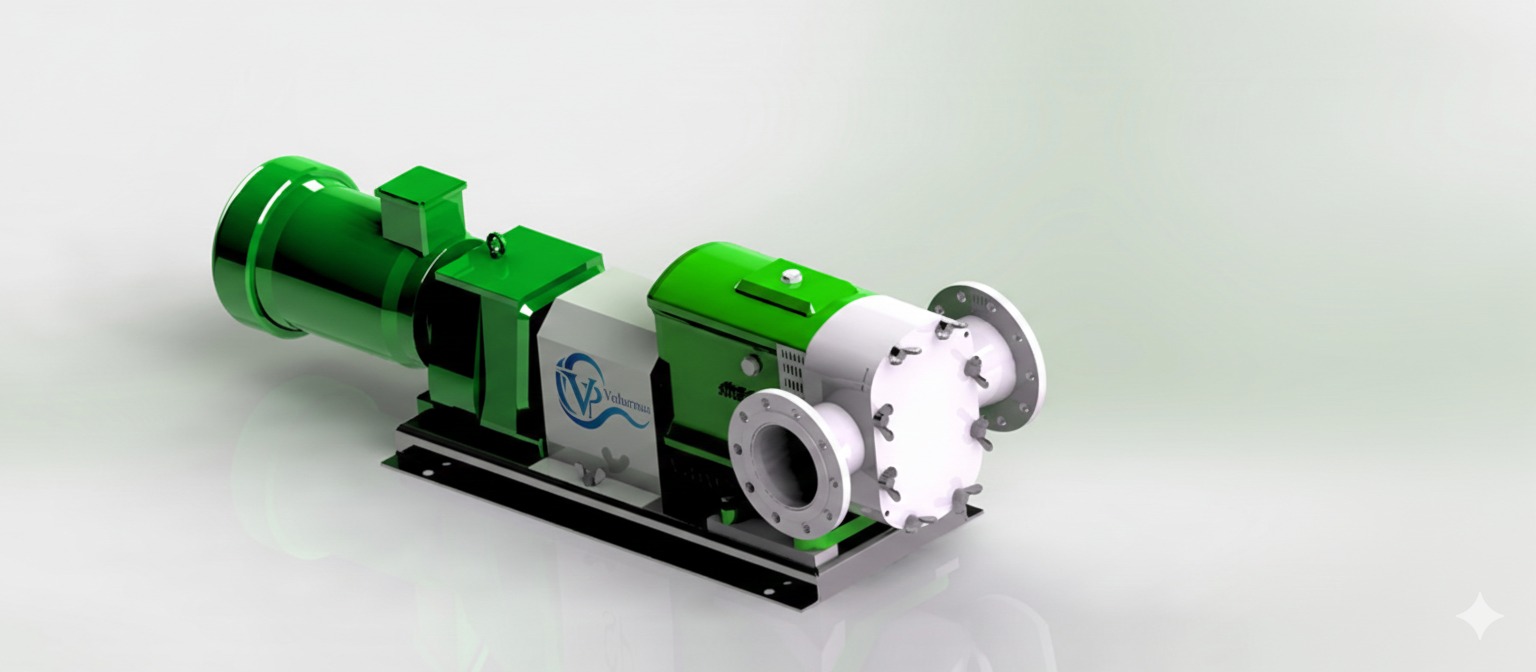
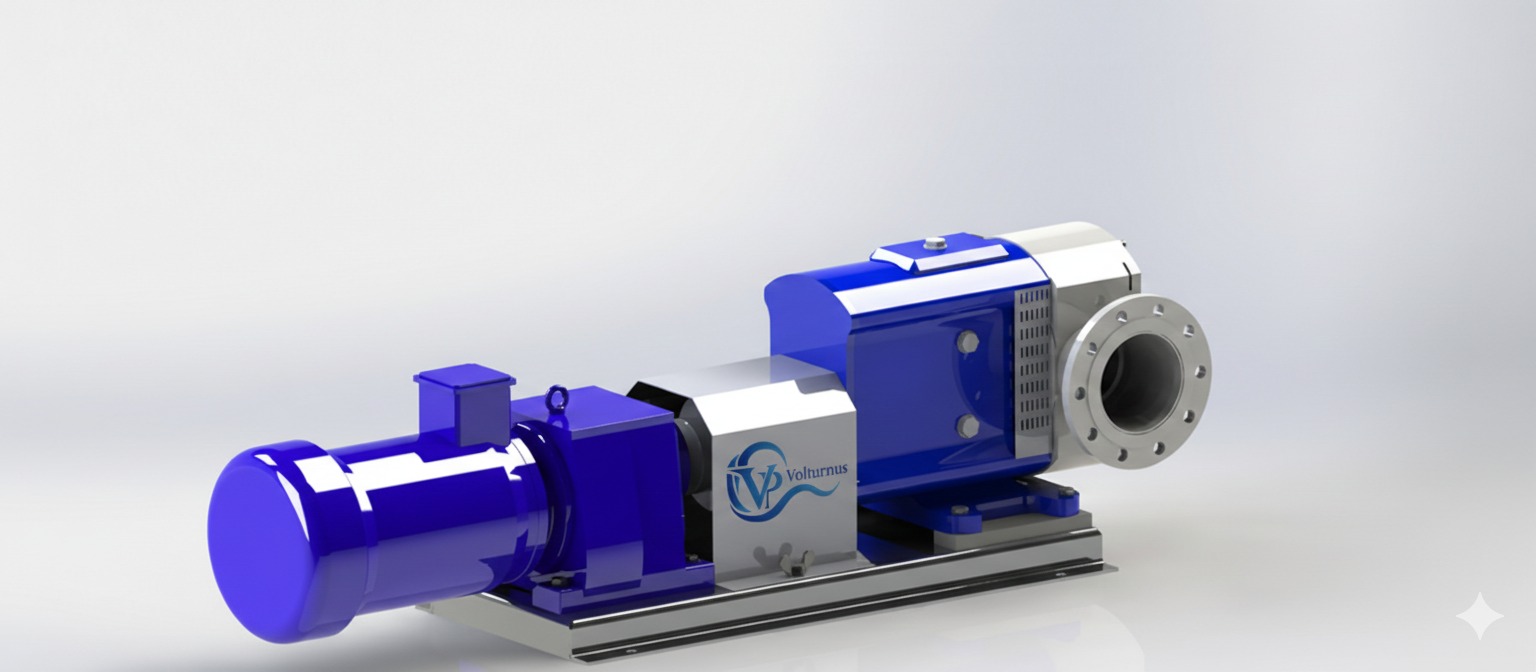
Volturnus Lobe pumps are popular in various fields due to their hygiene, high efficiency, safety, corrosion resistance, and in-situ cleaning capabilities. They are commonly used in the chemical, paper, food, beverage, and pharmaceutical industries.
In lobe pumps, contact between the lobes is prevented by timer drive gears. Because there is no contact between the lobes and they have a larger pumping chamber than other pump types, they can transfer solids such as cherries and olives without damaging them.
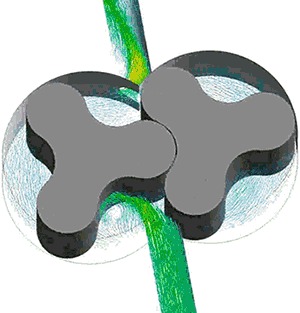
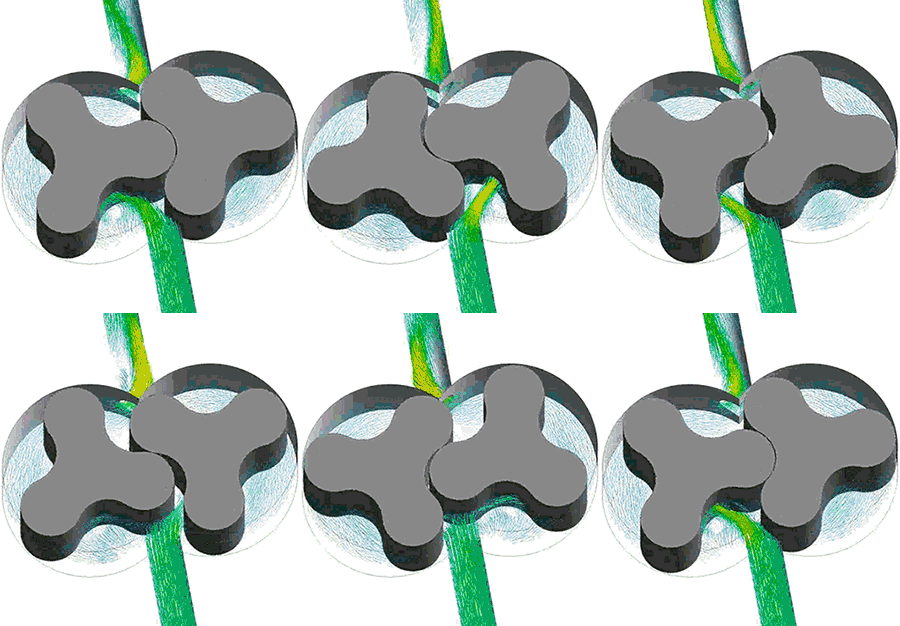
The lobe connected to the pump shaft transmits the motion it receives from the motor to the other lobe in the opposite direction via the timer drive gear. As the lobes move in opposite directions, the volume at the pump’s suction port expands. The resulting vacuum draws liquid into the pump. The liquid, transported between the lobes and the housing, moves towards the discharge port. The liquid does not pass between the lobes.
At the discharge port, the lobes interlock, pushing the liquid outwards under pressure. With each rotation of the pump shaft, an amount of liquid equal to the pump’s volume is transferred. Therefore, the pump’s capacity is directly proportional to its size and speed.
Lobe Pump Working Principle:
1- The lobe attached to the pump shaft transmits the motion it receives from the motor to the other lobe in the opposite direction via a timer drive gear, causing the lobes to separate and create a vacuum. Thanks to this vacuum, liquid flows into the pump.
2- The liquid that has entered the pump is transported between the lobes towards the pump’s discharge channel.
3- In the discharge channel, the lobes nestle together, pushing the liquid outwards.
4- The liquid pushed into the discharge channel flows through the system, and the transfer process is complete.
Design Features of the Volturnus Pump
Helical and modül gears in the gearbox ensure durability, high load resistance, and quiet operation.
The reinforced shaft ensures the pump can handle heavy loads and handle highly viscous liquids that require high pumping torque.
The absence of welds allows the pump to be used in applications where sanitary requirements are particularly stringent (products can cling to welds). Furthermore, the pump’s rigidity is increased.
Volturnus pumps are designed and manufactured in our Turkish factory using modern equipment and meet the highest quality standards.
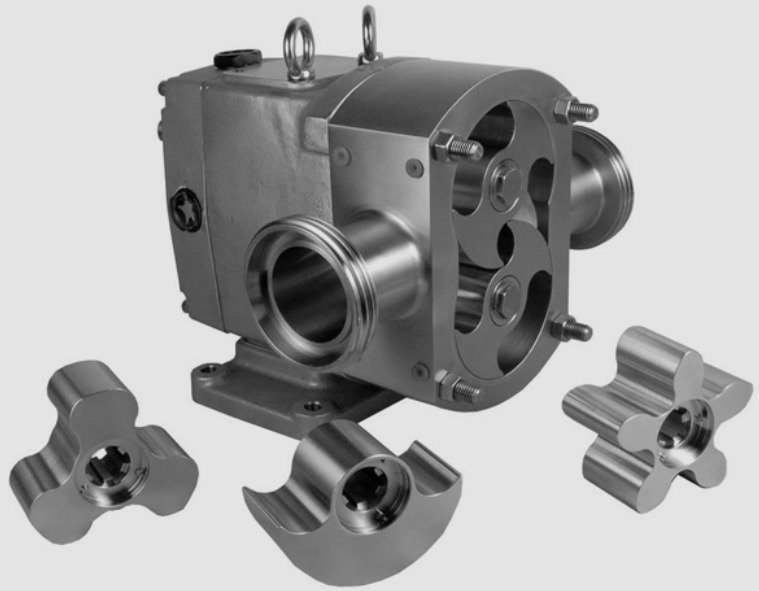
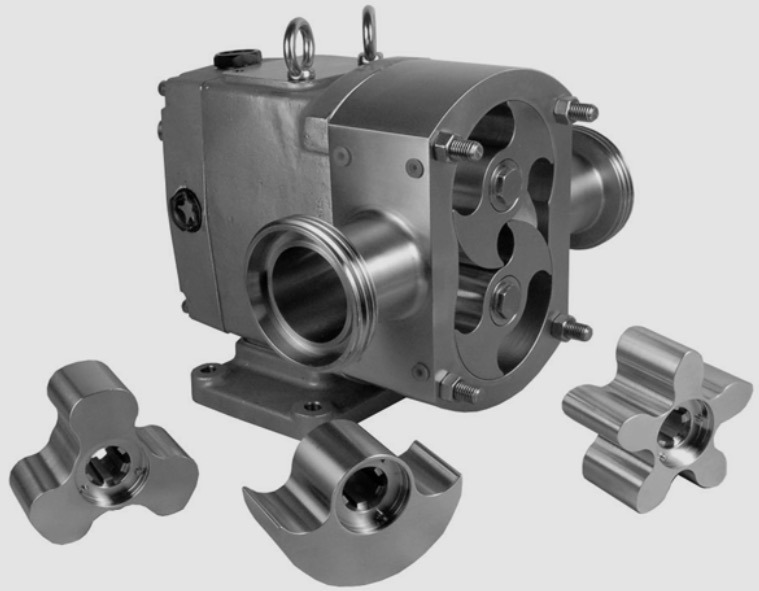
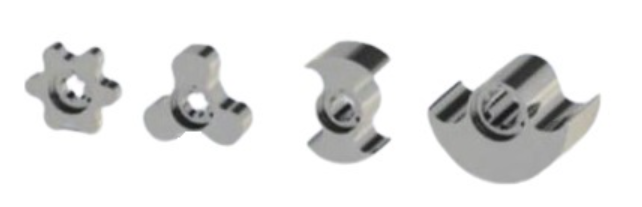
The optimal rotor shape can be selected for each product:
USE AREAS:
Food Industry (Chocolate, Sugar Syrup,Cream, Molasses)
Chemical Industry (Drugs, Detergents,Soap, Cosmetic creams…)